Sardine Run in South Africa
Discover when and where to experience the Sardine Run along the KwaZulu-Natal (KZN) South Coast. Practical viewing tips, best beaches, boat and dive options, safety and conservation notes, and FAQ for visitors.
The Annual Sardine Run
The annual Sardine Run is one of the most spectacular marine events on Earth — a seasonal movement of billions of small pelagic fish that turns the eastern coastline of South Africa into a feeding frenzy for dolphins, sharks, whales and seabirds. While the Eastern Cape is often where the shoals first appear, the KwaZulu-Natal (KZN) South Coast regularly offers excellent shoreline and boat-based viewing opportunities when conditions are right. This guide explains when to go, the best beaches and towns to watch from, how to experience the event responsibly, and practical tips for families and photographers.
Sardine Run Quick facts
- What: The Sardine Run — large shoals of Southern African pilchard (Sardinops sagax) moving along the east coast.
- When: Typically May–July, often peaking in June.
- Where on the KZN South Coast: Port Edward, Margate, Ramsgate, Hibberdene, Park Rynie and Durban.
- How to experience it: Shoreline viewing, boat safaris, guided dive or snorkel trips with experienced operators.
Best KZN South Coast beaches and towns to watch the Sardine Run
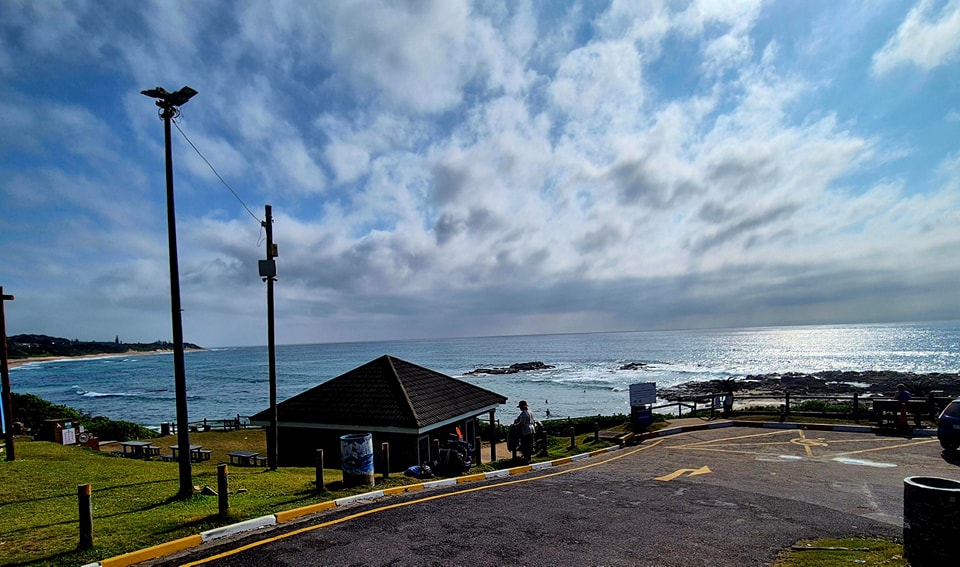
Port Edward — At the southern tip of KZN, Port Edward is often among the first KZN towns to pick up the shoals as they move north. Harbours and rocky reefs nearby create feeding corridors that attract dolphins and seabirds, and local charter operators regularly launch from the harbour. Good vantage points include the harbour wall and the cliffs above the main beach; expect basic visitor facilities and small cafés near the waterfront.
Trafalgar — Trafalgar’s headlands and rocky points make it an excellent shoreline lookout for surface feeding and gannet activity. It’s a quieter spot with good cliff-top views and safe pull-in parking for short visits. When shoals are close in, anglers and birdwatchers often spot dramatic surface boils from the promontories.
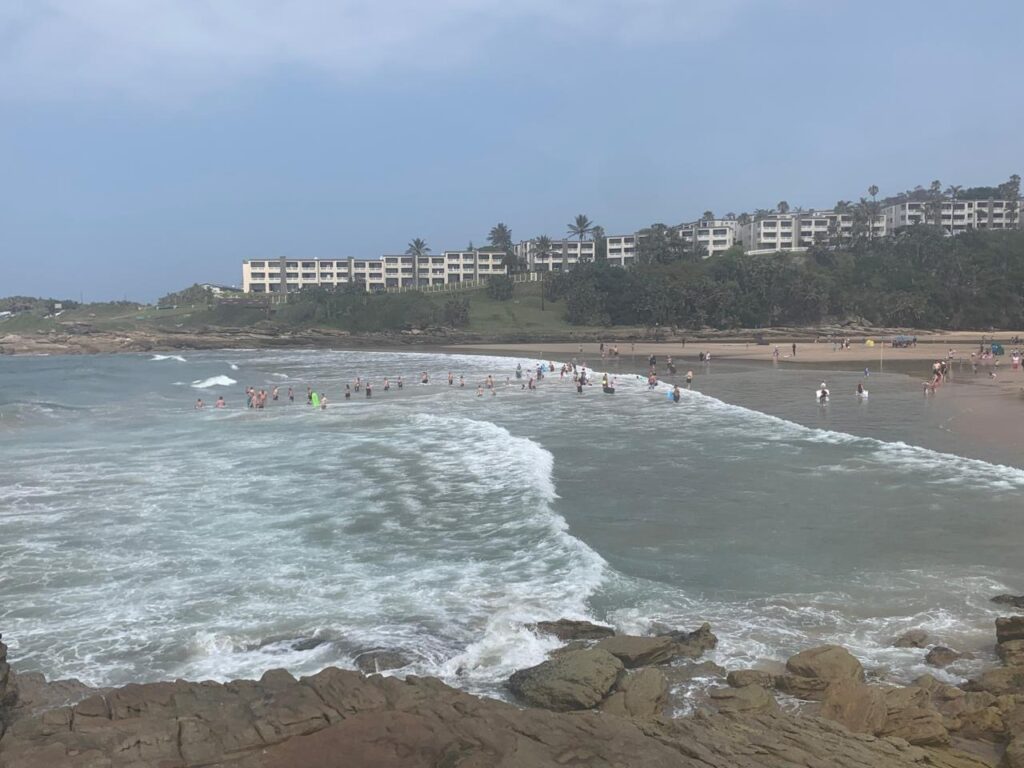
Margate & Ramsgate — These family-friendly towns offer broad beaches and easy shoreline access. Margate’s main beach and Ramsgate’s sheltered bay provide clear sightlines for surface feeding events; both towns have good tourist infrastructure (parking, lifeguards in season, restaurants) and short-hop charters available when the run is nearby. Cliff walks and the Ramsgate rock pools also provide elevated viewpoints for photographers.
Marina Beach & St Michael’s — Marina and neighbouring St Michael’s have long sandy stretches and good headland views that are useful for scanning the horizon. St Michael’s offers elevated picnic points and safe swimming areas for families when the sea is calm, while Marina’s jetties and rock outcrops are popular with local birders watching for gannet and tern activity.
Uvongo & Margate Heads — Uvongo’s river mouth and Margate Heads provide elevated cliff and river-mouth vantage points that can pick up surface action early. The combination of headlands and calmer bays sometimes concentrates smaller shoals close to shore, making it a reliable lookout when the main run is passing.
Southport & Port Shepstone — Southport’s long stretch of beach and Port Shepstone’s harbour zone are useful launch and viewing areas. Port Shepstone also acts as a handy logistics point for charters heading south or north along the coast and has more extensive services for visitors.
Scottburgh & Umkomaas — Scottburgh is a popular family beach with good facilities and lifeguards; when the sea is active, headlands near Scottburgh offer good scanning points. A short drive south, Umkomaas and the Aliwal Shoal area are better known for dive operations — when conditions permit, dive charters from Umkomaas may offer closer water-based viewing of predator activity around sardine shoals.
Hibberdene & Park Rynie — These quieter beaches are often overlooked, which can be an advantage for undisturbed shoreline viewing. Look for large seabird flocks and surface boils offshore; both towns have easy roadside pull-offs and small local cafés for refreshments while you wait.
Umzumbe & Umtentweni — Umzumbe’s long unspoilt beach and Umtentweni’s cliff paths provide quieter elevated vantage points away from the busiest tourist crowds. Both locations are useful when shoals are pushed close to the coast and often provide dramatic, scenic backdrops for photography.
Durban coastline — Durban serves as the main hub for larger charter boats, dive operators and commercial spotting networks. The harbour, North and South Beach promenades and elevated points along the Golden Mile can concentrate sightings in calmer weather. Durban’s infrastructure — multiple dive shops, charter operators and marine centres — makes it the primary go-to for organised Sardine Run trips from the KZN coast.
Practical viewing tips for the South Coast
- Choose high vantage points (headlands, cliffs, jetties) for the best wide-angle view of surface feeding and gannet activity.
- Check local lifeguard and municipal notices before entering the water; shoreline conditions can change rapidly.
- Contact local charters early — when the run is active, bookings fill quickly and operators will advise the best launch points.
- Bring binoculars and a telephoto lens — much of the action can occur beyond shore break.
- Respect local communities and conservation rules: avoid crowding sensitive shorelines and never take part in or promote illegal shore-netting.
How to experience the Sardine Run
Shore viewing (best for families and casual visitors)
- Watch from high vantage points or broad sandy beaches.
- Look for large flocks of Cape gannets, surface activity and diving birds — these are reliable signs a shoal is near.
- Bring binoculars and a telephoto lens for photos. Always follow lifeguard advice before entering the water.
Boat safaris (best for close encounters)
- Book reputable, insured operators that follow wildlife-distance guidelines.
- Expect early departures and variable sea conditions — wear layers and bring seasickness medication if needed.
Diving & snorkelling (advanced; operator-dependent)
- Only experienced dive operators should take snorkelers or divers into active sardine events; predator activity and surface turbulence can make conditions hazardous.
- Confirm operators follow safety protocols and wildlife-disturbance minimisation guidelines.
Conservation and safety
The Sardine Run supports a vast array of predators and is ecologically important. Changes in ocean temperature, currents and fishing pressure can affect timing and shoal size. Always choose operators that follow no-harassment guidelines, respect marine protected areas and avoid promoting harmful shore-netting or overcrowding that damages habitats.
The Sardine Run — Whales and Marine Life on the KZN South Coast
Every winter, the KwaZulu-Natal (KZN) South Coast becomes one of the world’s most spectacular marine stages — the Sardine Run. As billions of sardines move northwards, they attract an incredible variety of predators and ocean birds, creating a feeding frenzy that draws divers, photographers, and nature lovers from around the world.
Here’s a detailed look at the animals you can spot during this breathtaking event.
1. Common (Long-Beaked) Dolphins (Delphinus spp.)
What they do: Form massive “superpods” that herd sardines into tight bait balls. These dolphins are the key orchestrators of the run.
Where to spot: All along the South Coast, particularly near bays and shallow waters when cold currents push sardines close to shore.
Behaviour: High-speed chases, synchronized herding, and leaping through the water as they drive sardines upward.
Tip: Look for white splashing lines and a churning surface — a sure sign dolphins are rounding up bait fish.
2. Cape Gannets (Morus capensis)
What they do: Plunge-dive from heights of up to 30 metres into bait balls, hitting the water at incredible speed.
Where to spot: Very common throughout the run; gannets are often the first visible sign that sardines are near the surface.
Behaviour: Circling flocks and repeated, precise dive-bombing — a dramatic sight against the ocean backdrop.
Tip: When you see hundreds of gannets diving in one area, it’s a strong indicator that dolphins, whales, and sharks are feeding below.
3. Bryde’s Whales (Balaenoptera edeni)
What they do: Lunge-feed on dense sardine shoals, often bursting through the surface with mouths wide open.
Where to spot: Common along the KZN South Coast during the run, especially where dolphins and birds gather.
Behaviour: Quick surface lunges followed by a visible back roll — powerful and dramatic feeding displays.
Tip: Watch for coordinated activity between dolphins and birds; whales often move in shortly afterward.
4. Humpback Whales (Megaptera novaeangliae)
What they do: Migrate along the coast during winter, sometimes joining the sardine run to feed opportunistically.
Where to spot: Frequently seen off the KZN coastline between May and August.
Behaviour: Breaching, tail-slapping, and occasional surface feeding.
Tip: Their slow, powerful surfacing and long flippers make them easy to distinguish from Bryde’s whales.
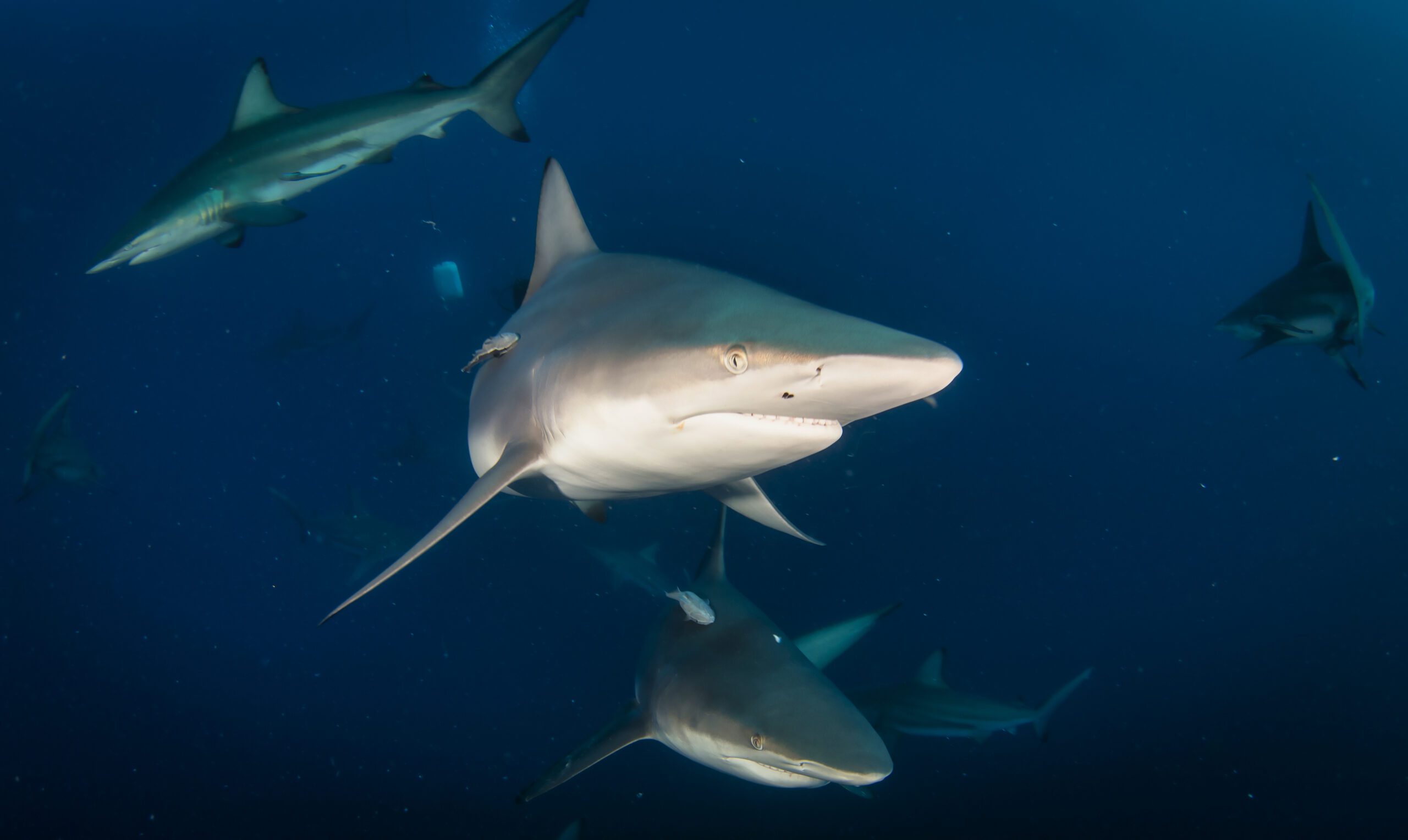
5. Sharks (Multiple Species)
Common species: Bronze whaler (copper shark), dusky shark, spinner shark, and blacktip shark.
What they do: Attack bait balls from below or the sides, often spinning or leaping while feeding.
Where to spot: Nearshore waters with high sardine density.
Behaviour: Sudden surface breaks, visible dorsal fins, and rapid bursts through the shoals.
Tip: Sharks often follow dolphins; if birds and dolphins are active, sharks are usually nearby.
6. Cape Fur Seals (Arctocephalus pusillus)
What they do: Join the feeding chaos when sardines move close to shore, chasing fish underwater with agile twists.
Where to spot: Occasionally along the KZN South Coast, especially during large bait ball events.
Behaviour: Diving and surfacing quickly near active bait balls, often popping their heads above water between chases.
Tip: Look for quick, sleek movements near the edges of dolphin pods.
7. Other Whale Species
Possible sightings: Southern right whales (Eubalaena australis) and minke whales (Balaenoptera acutorostrata).
What they do: Occasionally feed or pass through the sardine migration route.
Where to spot: Offshore areas of the lower South Coast.
Behaviour: Slow surface rolls and long dives, sometimes breaching.
Tip: Less common than humpbacks and Bryde’s whales, but a special sight when seen.
8. Game Fish
Examples: Garrick (leervis), king mackerel, and yellowtail.
What they do: Chase sardines from below, breaking the surface in fast, explosive strikes.
Where to spot: Near reefs, estuary mouths, and along coastal feeding zones.
Behaviour: Short bursts and splashes as they cut through bait balls.
Tip: Anglers often experience incredible fishing conditions during the run.
9. Other Seabirds
Common species: Terns, cormorants, shearwaters, petrels, and skuas.
What they do: Exploit the chaos above and below the surface, diving for sardines or scavenging leftovers.
Where to spot: Coastal skies anywhere sardine activity is visible.
Behaviour: Terns hover and dive, cormorants swim underwater, and skuas chase gannets to steal their catch.
Tip: A sky full of mixed bird species usually means an active sardine shoal below.
When and Where to Experience the Sardine Run
- Season: May to July, peaking in mid- to late June.
- Top viewing areas: Port Edward, Margate, Umzumbe, Scottburgh, and Port Shepstone.
- How to watch: From the beach with binoculars, or on licensed Sardine Run boat tours with experienced operators.
- Safety: Always use certified guides who maintain safe distances from wildlife.
Sardine Run Checklist
| Animal Type | Example Species | Likelihood | Activity |
|---|---|---|---|
| Dolphins | Long-beaked common dolphin | Very High | Herd and form bait balls |
| Whales | Bryde’s, Humpback | High | Surface lunge feeding |
| Sharks | Bronze whaler, Dusky, Spinner | High | Feeding below bait balls |
| Seabirds | Gannets, Terns, Shearwaters | Very High | Plunge diving |
| Seals | Cape fur seal | Moderate | Underwater hunting |
| Game Fish | Garrick, King mackerel | Moderate | Surface strikes |
FAQ
When is the best time to see the Sardine Run on the KZN South Coast?
The Sardine Run generally occurs between May and July, with many sightings peaking in June. Local timing depends on ocean temperature and currents, so check local updates during the season.
Which beaches are most reliable for sightings?
Port Edward, Margate, Ramsgate, Hibberdene and Park Rynie are commonly used viewing points when shoals move north. Durban is a main launch hub for charters.
Can I swim or snorkel with the sardines?
Swimming or snorkelling into active sardine shoals is risky due to predator activity and strong surface turbulence. Only enter the water under the guidance of experienced operators prioritising safety.
How do I choose a responsible tour operator?
Select licensed, insured operators with good reviews, small group sizes, trained crew and clear safety procedures. Ask about their wildlife code of conduct before booking.
Are shore netting or mass beachings legal?
Regulations vary. Do not participate in or promote illegal or environmentally damaging activities; consult local municipal notices for current rules.
Dive In Adventure Tours is our official South Coast Explore adventure partner for Sardine Run expeditions. A PADI 5-Star dive centre based in Shelly Beach, they run Protea Banks shark trips and seasonal Sardine Run small-group expeditions with experienced skippers and spotter-plane support. Conservation-focused and safety-first, they offer dive packages, snorkel options and multi-day combos.
Bookings: +27 71 439 0435 | [email protected]
More info & bookings: https://diveinadventuretours.com/ .