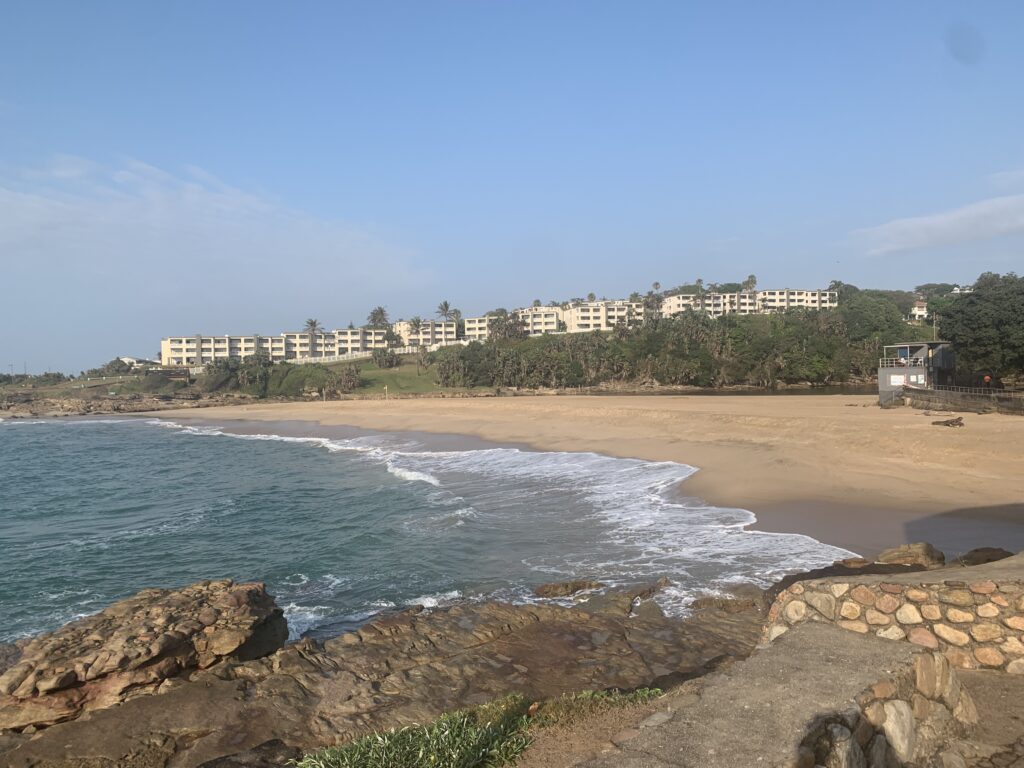

World’s Most Beautiful Beaches (2026 Edition)
Global Coastal Benchmark | South Coast Explore
The world’s most beautiful beaches are not defined solely by appearance. True coastal distinction emerges from a combination of environmental quality, geological structure, water clarity, ecological preservation, and internationally recognised management standards.
While beauty remains subjective, global tourism and environmental frameworks — particularly the Blue Flag certification programme — provide measurable benchmarks that allow coastlines across continents to be compared using consistent criteria.
This guide presents a structured global overview of visually and environmentally significant beaches while positioning South Africa within the broader international coastal system.
How the World Defines a Beautiful Beach
Across global tourism, conservation, and environmental management sectors, beach quality is generally evaluated using five core indicators:
Water Quality and Clarity
Clean, safe ocean conditions supported by regular environmental monitoring and internationally benchmarked testing standards.
Coastal Geology and Structure
Natural formations such as cliffs, lagoons, reefs, dunes, and distinctive shoreline systems that shape the visual and environmental identity of a coastline.
Environmental Management
Protection of ecosystems, responsible development, waste management, and long-term sustainability practices that preserve coastal environments for future generations.
Visitor Experience
Accessibility, safety, crowd balance, and authentic interaction with the natural environment all contribute to a beach’s international reputation.
International Recognition Systems
Programmes such as Blue Flag certification provide globally recognised validation for environmental quality, safety standards, and coastal management.
Together, these factors distinguish a coastline that is simply scenic from one considered globally significant.
Global Blue Flag Context (2025/2026 Season)
The Blue Flag programme remains one of the world’s most respected environmental certifications for beaches, marinas, and sustainable tourism vessels.
The programme is administered internationally by the Foundation for Environmental Education (FEE) and locally in South Africa by WESSA (Wildlife and Environment Society of South Africa).
Global Blue Flag Overview (2025/2026)
- 5,216 certified sites worldwide
- More than 4,300 certified beaches globally
- Active across 51 countries
Leading Blue Flag Nations
- Spain — 600+ certified beaches
- Greece — Approximately 657 beaches
- Türkiye — 570+ beaches
- Italy and Portugal — Extensive Mediterranean certification networks
South Africa’s Position
- More than 48 Blue Flag beaches nationally
- Strong representation across the Western Cape and KwaZulu-Natal
- Highest concentration of Blue Flag beaches in the Southern Hemisphere
Rather than pursuing high certification volumes alone, South Africa reflects a quality-driven coastal management model balancing tourism growth with environmental protection and natural coastal diversity.
The Blue Flag Programme in South Africa
The Blue Flag eco-label represents an internationally recognised benchmark for coastal excellence. Beaches awarded this status must comply with strict annual assessments covering environmental, safety, educational, and management standards.
Blue Flag Certification Evaluates Four Core Pillars
Water Quality
Continuous scientific testing ensures bathing water meets strict international health and safety standards.
Environmental Management
Clean shorelines, dune protection, waste management systems, and biodiversity conservation form part of long-term sustainability planning.
Safety and Services
Professional lifeguards, emergency equipment, accessible facilities, and clear visitor information are required.
Environmental Education
Public awareness programmes help promote marine conservation, sustainability, and responsible tourism behaviour.
Through this framework, South Africa demonstrates how tourism development can coexist with environmental stewardship, positioning its coastline within globally benchmarked coastal systems.
World’s Most Beautiful Beaches (2026 Selection)
The following beaches represent globally recognised coastal environments distinguished by geology, environmental integrity, biodiversity, and visual identity.
This selection demonstrates that world-class beaches exist across tropical, temperate, and urban coastal systems alike.
Anse Lazio — Seychelles
A granite-framed Indian Ocean coastline celebrated for turquoise water, fine white sand, and exceptional environmental preservation.
Massive granite formations create naturally protected swimming zones while maintaining ecological stability, establishing Anse Lazio as one of the most visually balanced tropical beach systems in the world.
Best Known For
- Granite boulder formations
- Crystal-clear Indian Ocean water
- Tropical island scenery
- Calm swimming conditions
Whitehaven Beach — Australia
Located within the protected Whitsunday Islands marine park, Whitehaven Beach is internationally recognised for its near-pure silica sand.
Tidal movement constantly reshapes the shoreline, producing shifting colour gradients and one of the most visually dynamic coastal systems on Earth.
Best Known For
- Pure white silica sand
- Protected marine ecosystems
- Unique tidal patterns
- Aerial coastal scenery
Navagio Beach — Greece
Surrounded by towering limestone cliffs on Zakynthos Island, Navagio Beach combines dramatic geological enclosure with intensely blue Mediterranean water.
Accessible mainly by sea, its isolation contributes to environmental preservation while reinforcing its status as one of Europe’s most iconic coastal landscapes.
Best Known For
- Limestone cliff formations
- Bright blue Mediterranean water
- Shipwreck scenery
- Isolated coastal setting
Baía do Sancho — Brazil
Situated within Fernando de Noronha Marine National Park, Baía do Sancho reflects a conservation-led tourism model focused on ecological preservation.
Restricted visitor access protects biodiversity while maintaining exceptional water clarity and natural coastal integrity.
Best Known For
- Marine conservation
- Cliff-backed scenery
- Exceptional biodiversity
- Protected tourism systems
Grace Bay — Turks and Caicos
Grace Bay stretches along a coral-protected shoreline known for calm conditions, powder-fine sand, and remarkable water transparency.
Offshore reef systems reduce wave energy while supporting marine biodiversity, creating one of the Caribbean’s most consistently ranked luxury beach destinations.
Best Known For
- Calm turquoise water
- Coral reef protection
- Luxury coastal tourism
- Soft white sand
Luskentyre Beach — Scotland
Located on the Isle of Harris, Luskentyre Beach challenges tropical stereotypes through expansive white sand flats and luminous turquoise water created by shallow seabed reflection.
The interaction between geology, climate, and natural light demonstrates how extraordinary beach beauty can exist within temperate coastal environments.
Best Known For
- Temperate coastal beauty
- White sand flats
- Remote landscapes
- Unique water colouration
Boulders Beach — Cape Town, South Africa
Boulders Beach represents one of the world’s rare examples where wildlife conservation and tourism successfully coexist.
Granite boulders create sheltered coves while supporting a protected African penguin colony, combining ecological significance with controlled visitor access.
Best Known For
- African penguin colony
- Granite boulder formations
- Wildlife tourism
- Conservation management
Clifton Beaches — Cape Town, South Africa
The Clifton Beaches consist of four naturally segmented coastal environments separated by granite outcrops along Cape Town’s Atlantic Seaboard.
These geological formations create distinct microclimates with varying wind exposure and ocean conditions, reinforcing Cape Town’s international coastal reputation.
Best Known For
- Atlantic Seaboard scenery
- Granite coastal formations
- Urban beach lifestyle
- Distinct microclimates
Marina Beach — KwaZulu-Natal, South Africa
Marina Beach represents one of South Africa’s most consistently managed coastal environments.
Recognised under the Blue Flag programme, the beach combines excellent water quality, dune conservation, and sustainable tourism planning aligned with internationally benchmarked coastal standards.
Best Known For
- Blue Flag certification
- Environmental management
- Family-friendly swimming
- Clean coastline systems
Umzumbe Beach — KwaZulu-Natal, South Africa
Umzumbe Beach reflects coastal beauty shaped by natural authenticity rather than large-scale commercial development.
Open dune systems, powerful surf conditions, and low-density infrastructure preserve a raw shoreline character increasingly rare in modern tourism environments.
Best Known For
- Natural coastal preservation
- Open dune systems
- Authentic beach environment
- Low-density tourism
South Africa in the Global Coastal System
South Africa occupies a unique position within global coastal geography by combining:
- Extensive natural coastline diversity
- Select Blue Flag-certified beaches
- Significant ecological variation across short geographic distances
This creates a hybrid coastal model where managed tourism environments and naturally preserved shorelines coexist successfully.
National Coastal Examples
- Boulders Beach — Integrated wildlife conservation system
- Clifton Beaches — Geology-driven urban coastal environment
- Umhlanga Coastal Zone — Structured tourism development along the Indian Ocean
- Marina Beach — Certified environmental management model
- Umzumbe Beach — Naturally preserved coastal landscape
South Coast KwaZulu-Natal Coastal System
The KwaZulu-Natal South Coast contributes significantly to South Africa’s broader coastal identity through its diverse shoreline systems.
Marina Beach
Blue Flag-recognised environmental management and excellent water quality standards.
Umzumbe Beach
Low-density development preserving a naturally intact Indian Ocean coastline.
Hibberdene Beach
Accessible tourism infrastructure supported by tidal pools and protected swimming zones.
Uvongo Beach
A rare geological system where a waterfall-fed lagoon meets the Indian Ocean, creating layered freshwater and marine coastal interaction within a single environment.
Global Coastal Positioning Insight
Three global coastal patterns emerge from international tourism and environmental management systems:
- Countries with high Blue Flag counts typically demonstrate structured coastal governance and environmental investment.
- Many iconic beaches achieve global recognition through unique geological identity rather than certification alone.
- South Africa represents a balanced coastal model combining internationally certified management with naturally preserved shoreline environments.
This positions the country as a highly diverse coastal destination rather than a single-category beach region.
Why the World’s Most Beautiful Beaches Matter
The world’s most beautiful beaches represent more than scenic destinations.
They reflect environmental stewardship, geological uniqueness, ecological balance, and sustainable interaction between people and natural systems.
From the granite coastlines of Seychelles to Scotland’s temperate shores and the lagoon systems of the KwaZulu-Natal South Coast, coastal beauty exists across multiple climates, cultures, and ecosystems.
South Coast Explore connects these global coastal benchmarks with South African shoreline identity, highlighting the country’s growing role within the international coastal tourism landscape.
Frequently Asked Questions
What is the most beautiful beach in the world?
There is no single official global ranking, but destinations in Seychelles, Australia, Greece, and Brazil consistently appear among the world’s most recognised coastal environments.
How many Blue Flag beaches exist worldwide?
Approximately 4,300 beaches hold Blue Flag certification across 51 countries during the 2025/2026 season.
Which country has the most Blue Flag beaches?
Spain currently leads globally, followed closely by Greece and Türkiye.
Does South Africa have Blue Flag beaches?
Yes. South Africa maintains more than 48 Blue Flag beaches, mainly located in the Western Cape and KwaZulu-Natal.
Why is Uvongo Beach unique?
Uvongo Beach combines a waterfall, lagoon, and ocean system within a single coastal environment — a rare geological configuration internationally.
Are South African beaches considered world-class?
Yes. South Africa combines internationally recognised coastal management with naturally high-value marine environments, positioning many of its beaches among the world’s most diverse and environmentally significant coastal destinations.